

Here we offer you a proposal to enjoy this experience at all levels and with all your senses. We organize everything for you so you can focus solely on pedaling. At the same time, if you’re not traveling alone and your family wants to join, they can also enjoy a wide range of experiences and activities based at an exceptional holiday resort.
This is an operational proposal, but this setup can be customized based on your needs, available days, time of year, whether you’re traveling solo or with others (so that your family can also enjoy a full range of activities for their enjoyment), etc.
Feel free to contact us to resolve any questions and so we can adapt to your priorities: defytarraco@gmail.com.
OUR TRAVEL PROPOSAL:
Day 1: Airport Pickup

We will pick you up at the airport you choose to arrive at our territory (the airports where we offer pickups are: Reus, Barcelona, and Girona).

Dinner: Holiday Resort: We prepare a self-service dinner at this resort, where we can share a table with many athletes who are here for their training stages—ideal for everything that lies ahead.
Sleep: Holiday Resort: A holiday resort on the Costa Daurada, perfect for families. Its location allows easy access to the beaches of Cambrils and Salou, as well as to Port Aventura and Tarragona.
Day 2: Tarragona – Rocallaura
Summary of the First Day of the Route:
The first day of this gravel route takes us from the historic city of Tarragona to the Balneario de Rocallaura, covering a demanding but history-filled path with spectacular landscapes and charming inland villages in Tarragona.
Start: Tarragona and its historical heritage
The journey begins in Tarragona, a city declared a UNESCO World Heritage site. Before starting the pedaling, it’s worth visiting some of its most iconic monuments:
- Roman Amphitheater, with views of the Mediterranean Sea, a key point in ancient
- Tarraco.Tarragona Cathedral, an imposing mix of Romanesque and Gothic styles.
- Aqueduct of les Ferreres, also known as the Pont del Diable, a jewel of Roman engineering just outside the city.

From here, we take the dirt roads leading us away from the coast, heading into the Tarragonès region.
Route towards El Catllar and the Gaià river
The first stretch of the route follows gravel paths towards El Catllar, a small village with a well-preserved medieval castle. From here, we ride through the Gaià river basin, a natural setting that combines agricultural roads and compact trail sections ideal for gravel.

Climb towards Santes Creus: Monasteries and Culture
After leaving the Gaià plain, the road becomes more challenging as we approach the Monastery of Santes Creus, one of the gems of the Catalan Cistercian heritage. It’s worth making a stop to admire its impressive cloister and recharge at one of the town’s inns.
From Santes Creus, the terrain becomes more rugged, and the accumulated elevation gain starts to be felt as we move further into the province.

Rocafort de Queralt and Forés: Panoramic views and rural landscapes
The stretch to Rocafort de Queralt winds through agricultural paths and trails that weave between vineyards and almond trees, characteristic of the Conca de Barberà region. This small village retains the essence of rural Catalonia, with narrow streets and absolute tranquility.
Later, we reach Forés, a privileged natural viewpoint with stunning views over the entire region. It’s an ideal place to pause, take some photos, and prepare for the final part of the stage.
Arrival at Rocallaura: Rest in an idyllic setting
From Forés, the path leads us to Rocallaura, where the first day ends. After an intense day of gravel, this is the perfect moment to relax and recover for the following day.
Day summary:
- Approximate Distance: 100 km
- Accumulated Elevation Gain: +1,800 m
- Estimated Duration: 6-8 hours (depending on pace and stops)
- Difficulty: Medium-High (due to elevation gain and some technical sections)
- Key Points: Tarragona, Aqueduct of les Ferreres, Monastery of Santes Creus, Forés, Rocallaura
This first day combines history, culture, and spectacular landscapes, with a perfect finish in a peaceful and relaxing environment. Ready for the second day of the route?
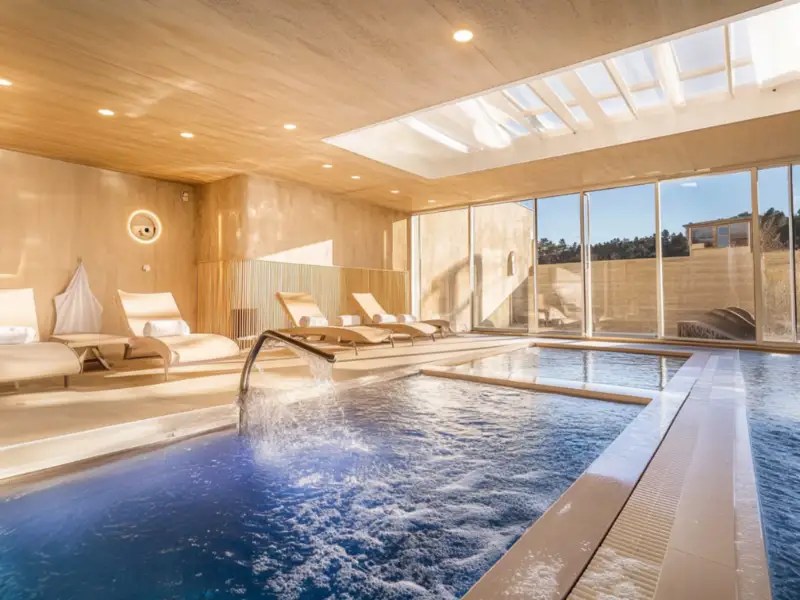
Cena: Hotel **** (Self-service dinner in a four-star hotel).
Dormir: Hotel **** (In a 4-star hotel on the Cistercian Route, ideal for relaxation and recovery).
Complementary Activity: Opportunity to enjoy a thermal circuit to recover body and mind.
Day 3: Rocallaura – Siurana
Summary of the second day of the route: From Rocallaura to Siurana
The second day of this adventure takes us from the Balneario de Rocallaura to the spectacular village of Siurana, following a demanding but fascinating route through the landscapes of Conca de Barberà and the Montsant Natural Park. On this day, we will pass through monasteries, medieval castles, and charming villages before reaching one of the most iconic spots for cycling and climbing in Catalonia.
Start: Rocallaura and Vallbona de les Monges
The day begins in Rocallaura, where we leave the thermal waters behind and venture onto rolling dirt paths towards Vallbona de les Monges, one of the historical highlights of the day. This small town is home to the Monastery of Vallbona de les Monges, a Cistercian gem worth a brief stop to admire its architecture.

From here, we continue along rural roads between vineyards and olive groves, gently ascending as we enter the Conca de Barberà region.
On the way to Montblanc: Medieval history on gravel
The route takes us to Montblanc, one of Catalonia’s best-preserved medieval villages. This walled city offers an impressive postcard with its towers and cobbled streets, making it a great spot to rest and enjoy a coffee in its main square. It’s said that Sant Jordi slayed the dragon here, adding a legendary touch to the route.

From Montblanc, we head towards Milmanda Castle, an ancient medieval fortress surrounded by vineyards, now part of the Torres wineries. The landscape becomes increasingly lush, signaling our entry into the Poblet Natural Park.

Poblet Monastery and the climb to Prades
Shortly after, we reach the Monastery of Poblet, the largest and best-preserved of the three Cistercian monasteries in Catalonia. It’s an essential site where several kings of the Crown of Aragon are buried.

After this cultural stop, the route becomes more demanding, with a long ascent on dirt paths and trails surrounded by forests towards Prades. This stretch, although tough, offers stunning landscapes and a clear transition from agricultural land to high mountain terrain. This is one of the standout gravel sections of our route.

Final challenge: From Prades to Siurana
From Prades, we head towards the final section of the day, a spectacular traverse through forest trails and technical paths to Siurana, a village perched on a cliff with breathtaking views of the reservoir and the Priorat Mountains.

Siurana is an unbeatable endpoint, both for its beauty and its history. Here, among its cobbled streets and vertiginous viewpoints, we can enjoy a well-deserved dinner with a view before resting for the next day’s route.
Day summary:
- Approximate Distance: 85 km
- Accumulated Elevation Gain: +2,000 m
- Estimated Duration: 7-9 hours (depending on pace and stops)
- Difficulty: High (long ascents and technical terrain in some sections)
- Key Points: Vallbona de les Monges, Montblanc, Milmanda Castle, Poblet Monastery, Prades, Siurana
This second stage takes us through some of the most historic and scenic corners of Catalonia, combining medieval monasteries, wild nature, and an epic finish at the natural balcony of Siurana. An intense and spectacular day for gravel lovers!

Dinner: Restaurant in Siurana (Option to dine in a restaurant with a prestigious chef, 1 Michelin star).
Sleep: Hotel in Siurana (A charming hotel set in an unbeatable location, where the proximity and warmth of its owners make it exclusive and delightful).
Complementary Activity: Opportunity to taste wines from the Priorat DO.
Day 4: Siurana – Mora d’Ebre
Summary of the third day of the route: From Siurana to Móra d’Ebre – Between Vineyards, Olive Groves, and Mountains
The third day of our gravel route takes us from Siurana to Móra d’Ebre, traversing some of the most iconic landscapes of the Priorat and the Serra del Montsant Natural Park. On this stage, alongside the history and spectacular mountain scenery, the culture of wine and olive oil takes on special importance. The region is dominated by the vineyards of the DOQ Priorat and DO Montsant, as well as the legendary olive groves of the DOP Siurana, which produce one of the most prestigious extra virgin olive oils in Catalonia.
Start: Siurana and descent towards Cornudella de Montsant
We bid farewell to the magical village of Siurana with a descent towards Cornudella de Montsant, where we can spot the first century-old olive trees that define the agricultural landscape of the region. Here, it is possible to visit some of the local cooperatives that produce extra virgin olive oil from the DOP Siurana, recognized for its quality and fruity, sweet profile.
From here, the route takes us towards La Morera de Montsant, an ascent that leads us into the Serra del Montsant Natural Park, offering spectacular panoramic views and a rugged mountain environment, perfect for gravel cycling.

Cartuja de Escaladei: History and Landscape
The route continues towards one of the most symbolic points of the day: the Cartuja de Escaladei, the first Carthusian monastery in the Iberian Peninsula. Founded in the 12th century, this site was not only the spiritual heart of the region but also the birthplace of the Priorat wine tradition.

Here, the terraced vineyards dominate the landscape, but we also find olive trees of native varieties like Arbequina, which have survived for centuries in this harsh, dry terrain. It’s a great time for a brief stop to enjoy the fusion of history, landscape, and agricultural culture.
Between Vineyards and Olive Groves: La Vilella Alta, La Vilella Baixa, and Gratallops
From Escaladei, we ride along agricultural tracks winding through vineyards and olive groves, reaching La Vilella Altaand La Vilella Baixa, two medieval villages perched on the hills of Priorat. These locations offer a perfect postcard of terraced farming, with vineyards and olive fields embracing the slopes of the mountains.
Further along, we arrive in Gratallops, where we find some of the most prestigious wineries in the DOQ Priorat. It’s a great place for a short break and, if time permits, a quick tasting of the powerful and structured wines of the region.
Falset, Bellmunt and the final descent to Mora d’Ebre
From Gratallops, the route continues towards Falset, the capital of Priorat, where it’s possible to taste both wines and olive oils from the DOP Siurana at the local cooperative. This city is a great spot for lunch before tackling the final stretch of the stage.
.The last effort takes us along dirt tracks to Bellmunt del Priorat, an area with a mining history, where olive groves appear again before we begin the final descent towards Móra d’Ebre. As we reach the banks of the Ebro River, the landscape changes, with a wider valley and an increasing presence of olive, almond, and fruit orchards.

Day summary:
- Approximate Distance: 90 km
- Accumulated Elevation Gain: +2,200 m
- Estimated Duration: 7-9 hours (depending on pace and stops)
- Difficulty: High (challenging climbs and technical terrain in some sections)
- Key Points: Cornudella de Montsant, La Morera de Montsant, Cartuja de Escaladei, La Vilella Alta and Baixa, Gratallops, Falset, Bellmunt del Priorat, Móra d’Ebre.
- Local Gastronomy: Extra virgin olive oil DOP Siurana, DOQ Priorat wines, DO Montsant wines.
This stage is a complete immersion in Priorat and the culture of olive oil and wine, combining physical challenges with the beauty of the landscape. A perfect day to enjoy gravel cycling, history, and the agricultural richness of the region.

Dinner: Restaurant in Mora d’Ebre: A restaurant offering a special and charming culinary proposal.
Sleep: Hotel in Mora d’Ebre: An aparthotel located in this town, with different apartment options, including ones with views of the Ebro River.
Complementary Activity: Opportunity to enjoy an olive oil and vermouth tasting in Priorat Falset, along the route.
Day 5: Mora d’Ebre – Beceite
Summary of the fourth day of the route: From Mora d’Ebre to Beceite – from the Ebro river basin to Matarraña
The fourth day of our route takes us from Móra d’Ebre to Beceite, venturing into the Matarraña region, known as the “Spanish Tuscany” for its rolling landscapes, medieval villages, and the combination of vineyards, olive groves, and almond trees. On this day, we travel along gravel paths through DOP Siurana olive groves, discover remnants of the Spanish Civil War, ride through the spectacular Vía Verde de la Val de Zafán, and finish with an approach to the Portsarea in Beceite, one of the wildest natural areas in Aragon.
Start: Mora d’Ebre towards Corbera d’Ebre
The day begins in Mora d’Ebre, leaving behind the Ebro River and gaining altitude on dirt tracks towards Corbera d’Ebre, where we find Poble Vell, a set of ruins that bear witness to the harshness of the Battle of the Ebro. From here, we enter a landscape dominated by century-old olive groves of the DOP Siurana, where extra virgin olive oil is still produced using traditional methods in local cooperatives.
Gandesa and the history of Terra Alta
Continuing our journey, we arrive in Gandesa, the capital of Terra Alta, a region famous for its DO Terra Alta wines, primarily made from the Garnacha Blanca variety, as well as for its key role in the Spanish Civil War. Here, we can visit the Cooperativa Vinícola de Gandesa, a stunning modernist building.
Bot and the Vía Verde de la Val de Zafán
From Gandesa, we ride to Bot, where we join the Vía Verde de la Val de Zafán, an old railway line converted into a cycling path. This section is a delight for gravel riding, with tunnels, viaducts, and smooth pedaling that takes us to Horta de Sant Joan. This medieval village, with its cobbled streets and stone houses, was a source of inspiration for Pablo Picasso, who said, “Everything I know, I learned in Horta.”

Arnes and the entrance to Matarraña
From Horta de Sant Joan, we continue towards Arnes, the gateway to the Matarraña region, one of the most beautiful and lesser-known areas of Aragon. Its landscapes resemble Tuscany, with hills covered in olive and almond trees, perfectly preserved medieval villages, and a gastronomy based on local products like olive oil, truffles, and ternasco(lamb).
The final stretch takes us into the Massís dels Ports, a mountainous area of dense forests, canyons, and crystal-clear rivers. The arrival in Beceite, with its charming historic center and its proximity to places like Parrizal and the Matarraña River, is the perfect closure for this day.

Day Summary:
- Approximate Distance: 73 km
- Accumulated Elevation Gain: +1,650 m
- Estimated Duration: 7-9 hours (depending on pace and stops)
- Difficulty: Medium-High (fast gravel on the Vía Verde, challenging climbs in Terra Alta and Matarraña)
- Key Points: Corbera d’Ebre (Poble Vell), Gandesa, Bot, Vía Verde de la Val de Zafán, Horta de Sant Joan, Arnes, Beceite.
- Local Gastronomy: DO Terra Alta wines, extra virgin olive oilDOP Siurana, black truffle, ternasco (lamb), and artisanal pasta.
This stage offers a rich immersion in both history and nature, featuring some of the most iconic spots in Terra Alta and Matarraña, while delighting in local flavors. A memorable day combining gravel cycling and cultural exploration.

Dinner: Restaurant in Beceite: Option to choose a restaurant with the only Sol Repsol awards for 2023 and 2024 in the Teruel province.
Sleep: Hotel in Beceite: A hotel located in the town of Beceite, on the banks of the Matarraña River, renovated in a clean and modern design style.
Complementary Activity: Opportunity to enjoy a gourmet tasting along the route.
Day 6: Beceite – L’Atmetlla de Mar
Summary of the fifth day of the route: From Beceite to L’Ampolla – From the Massís dels Ports to the Ebro Delta
The fifth day of our route takes us from Beceite to L’Ampolla, with a spectacular descent from the mountains of the Massís dels Ports to the plain of the Ebro Delta, ending the stage on the shores of the Mediterranean. This day combines technical mountain terrain, gravel sections on forest tracks, reservoirs, and finally the vast rice fields and open landscapes of the delta.
Start: Beceite and ascent to Font Ferrera
From Beceite, we enter the Massís dels Ports, one of the wildest natural areas in the region, with mountain trails surrounded by dense forests and limestone canyons. The ascent to the Font Ferrera Refuge is demanding, with steep inclines and technical gravel sections, but the panoramic views and natural surroundings make the effort worthwhile.
Here, in the heart of the Parc Natural dels Ports, it’s easy to spot wild goats and enjoy the silence of the mountains before beginning the descent towards the Ulldecona Reservoir.

Pantà d’Ulldecona and descent to La Sénia
From Font Ferrera, we descend towards the Pantà d’Ulldecona, a turquoise reservoir surrounded by rugged mountains. This section allows for fast, smooth gravel riding as we make our way to La Sénia, a town historically linked to furniture production, with an interesting blend of agricultural and industrial tradition.
Here, olive groves once again dominate the landscape, offering a perfect opportunity to taste DOP Baix Ebre-Montsià olive oils, complementing the route’s rich olive culture.
Amposta and the Iron Bridge: Entrada to the Ebro Delta
From La Sénia, we take dirt tracks heading towards Amposta, where the landscape changes radically: we leave behind the mountains and enter the flatlands of the Ebro Delta, a mosaic of rice fields, lagoons, and water channels. In Amposta, we cross the iconic Pont de Ferro, one of the city’s symbols, before continuing towards the heart of the delta.
The wind can be a key factor in this section of the stage, as the lack of elevation makes wind resistance the main challenge.

Deltebre and arrival at L’Ampolla, on the shores of the Mediterranean Sea
The route takes us through Deltebre, where the Ebro River expands into a network of channels and lagoons. Here, we can make a stop to observe birds in the lagoons of the Parc Natural del Delta de l’Ebre, home to flamingos and a wide variety of aquatic wildlife.
The final stretch takes us along flat paths to L’Ampolla, where we reach the Mediterranean Sea. This fishing village is known for its seafood and rice dishes, making it the perfect place to celebrate the end of the stage with a delicious arròs negre or fideuà by the sea.

Day summary:
- Approximate Distance: 112 km
- Accumulated Elevation Gain: +1,400 m (mostly in the first half)
- Estimated Duration: 7-10 hours (depending on pace and stops)
- Difficulty: High (challenging ascents in Els Ports, wind in the Delta)Key Points: Font Ferrera, Pantà d’Ulldecona, La Sénia, Amposta (Iron Bridge), Deltebre, L’Ampolla
- Local Gastronomy: Extra virgin olive oilDOP Baix Ebre-Montsià, Delta Ebro rice, fresh seafood and fish
This stage offers a spectacular contrast between the rugged mountains of Els Ports and the serene waters of the Ebro Delta, culminating in a finish by the Mediterranean Sea. An epic day to close the journey.

Dinner: Restaurant in L’Atmetlla de Mar: A restaurant located near the mouth of the Ebro River, specializing in deltaic and Mediterranean cuisine.
Sleep: Hotel in L’Atmetlla de Mar: Situated by the sea, at the gateway to the Delta de l’Ebre, offering the best services and spaces for an unforgettable stay.
Complementary Activity: Opportunity to enjoy an oyster and mussel tasting in Amposta.
Day 7: L’Atmetlla de Mar – Cambrils
Summary of the sixth day of the route: From L’Ampolla to Cambrils – Riding through the DIP Territory
The sixth and final day of our gravel route takes us from L’Ampolla to Cambrils, combining two completely different landscapes: the spectacular coastline of coves and cliffs of the Costa Daurada and the mountainous interior dominated by the rugged landscapes of the DIP (Vandellòs, Llaberia, and Pratdip). This stage is the shortest of all, but still intense, as it combines fast coastal sections with demanding climbs in the interior.
Start: L’Ampolla and the beautiful coves of the Costa Daurada
From L’Ampolla, we begin the day following coastal paths that wind through some of the most spectacular “calas” of the Costa Daurada. We ride along tracks and trails with views of the Mediterranean, passing through paradisiacal places like Cala Forn, Cala Vidre, and Cala Sant Jordi in L’Ametlla de Mar.

This first section is a delight for the senses: the sound of the sea, the scent of the pines, and the sea breeze accompany us as we pedal through a postcard-like environment.

From the coast to the interior: Mountains of Tivissa – Vandellòs
After leaving the beaches behind, the route heads inland towards the Muntanyes de Tivissa – Vandellòs, where the landscape changes radically. Here, we take forest tracks and rural roads that lead us towards the Gavadà area, a transitional zone between the coast and the mountains.

The ascent towards Vandellòs marks the first major climb of the day. This section takes us through a Mediterranean mountain landscape, with compact dirt paths winding through pine forests and ancient olive and almond grove terraces.
The DIP mountains: Santa Marina and Pratdip
From Vandellòs, we enter the DIP territory (Vandellós, Llaberia y Pratdip), DIP territory (Vandellòs, Llaberia, and Pratdip), a mountainous area of great beauty with technical and demanding terrain for gravel riding. The ascent to Santa Marina, with its ancient hermitage at the top, offers spectacular views of the interior of Tarragona.

Next, we descend towards Pratdip, a village surrounded by legends of the mythical “dips,” vampiric creatures from local mythology. The combination of trails, rural roads, and fast tracks makes this section one of the most enjoyable of the day.

Descent to Mont-roig del Camp and arrival at Cambrils
After overcoming the DIP mountains, we begin a gradual descent towards Mont-roig del Camp, where the landscape opens up again and the gravel tracks allow for smoother riding. This area, immortalized in the paintings of Joan Miró, is perfect for loosening up before the final stretch.
The last part of the route takes us to Cambrils, one of the most important cycling tourism destinations on the Costa Daurada, where the sea greets us once more to close the day with a delicious arròs or fideuà at one of its restaurants by the port.
Day summary:
- Approximate Distance: 80 km
- Accumulated Elevation Gain: +1,400 m
- Estimated Duration: 5-7 hours (depending on pace and stops)
- Difficulty: Medium (technical sections in the Tivissa – Vandellòs Mountains)
- Key Points: Coves of Costa Daurada (Cala Forn, Cala Vidre, Cala Sant Jordi), Vandellòs, DIP Mountains (Santa Marina and Pratdip), Mont-roig del Camp, Cambrils
- Local Gastronomy: Fresh fish and seafood in Cambrils, mariner rice, extra virgin olive oil DOP Siurana
This day combines the beauty of the coast with the ruggedness of the mountains, offering one of the most varied stages of the route. A spectacular finish to an unforgettable journey.

Dinner: Holiday Resort: We return to the base of this entire experience, a familiar place for our last night in Tarragona.
Sleep: Holiday Resort: The best rest after an unforgettable experience.
Day 8: Transfer to the Airport. Return Home
The last coffee, the final conversations before heading to the airport (remember, we provide pickups at the Reus, Barcelona, and Girona airports) so you can return to your place of residence.

And with this, we conclude the experience.
Our goal is for this week on the bike to be unforgettable and to inspire in you a desire to return to our territory, knowing that you’ve already discovered a part of it and, most importantly, that you’ve taken a part of us with you.
We look forward to seeing you VERY SOON!
What’s included in your trip:*
- Airport transfers (round-trip to Reus, Barcelona, or Girona airports)
- 7 overnight stays in hotels and resorts (depending on the resting place and availability)
- Enjoyment of various high-value sensory experiences
- Breakfasts, lunches, and dinners on travel days
- Luggage transfer (two bags per cyclist)
- Daily bike maintenance (in case of breakdowns, parts not included)
- Cyclist bag gift
- Event insurance for the route
- Photos as a souvenir of the trip
- Bike rental (not included in the price)
- PRICE: (Please inquire about prices and conditions)
*This is a potential setup. Based on your needs, we can customize it. Request your personalized quote with your priorities, and we will be happy to prepare the trip for you.
Do you have any questions? Contact us

